
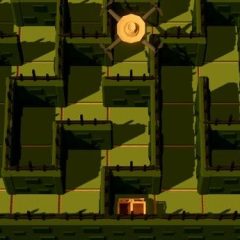
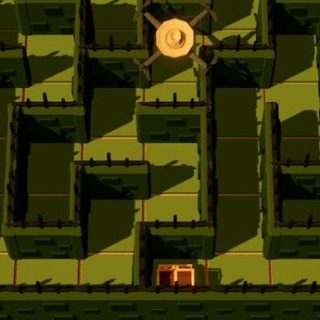

















The Farmer Was Replaced presents farming as a system driven by programmable routines rather than manual control. The player oversees a drone that performs every action on the field by following written scripts. The main challenge lies in building instructions that function reliably across expanding farmland. Each improvement to the drone or plot introduces new considerations for how automation should operate, making the process an ongoing cycle of testing and refining.
Early Introduction To Commands
The beginning of the game focuses on learning how basic instructions interact with the environment. The player starts with a minimal field layout and a limited number of actions such as movement, planting, and harvesting. Early success is tied to understanding how sequences execute step by step. The player soon realizes that even a simple script must be structured carefully to avoid wasted time or unintended loops. As more land becomes available, these small routines form the basis for larger automation systems.
Building Efficient Workflows
When the farm expands, earlier scripts may no longer meet the demands of larger plots. The player must reorganize routines to maintain consistency across bigger fields. At this stage, progression often involves tasks such as:
· Designing routes that cover the field in predictable patterns
· Scheduling planting and harvesting so cycles do not conflict
· Creating loops that repeat multiple steps automatically
· Integrating new resource types into existing processes
These elements help the player understand how different components of automation cooperate during longer runs.
Managing Complex Conditions
As new crop types and mechanics appear, The Farmer Was Replaced requires more sophisticated coding solutions. Some plants may grow at different rates, while others require action at specific times. The player introduces conditional logic, subdivides tasks into smaller functions, or restructures entire scripts to ensure they remain functional under varied conditions. This part of the game encourages attention to timing, interaction order, and the limitations of the drone’s capabilities.
Long-Term Structure And Evolving Code
In the later phases of gameplay, the farm becomes a large automated system defined entirely by the scripts the player has written. At this point, improvements often come from refining existing routines rather than expanding outward. The player may rebuild earlier code to reduce repetition, shorten execution time, or adjust navigation patterns. Because automation is always open to improvement, The Farmer Was Replaced supports long-term experimentation and repeated testing, allowing new approaches to emerge naturally through continued play.
