








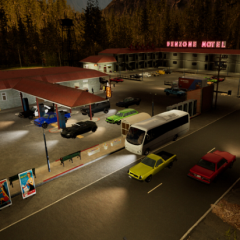

















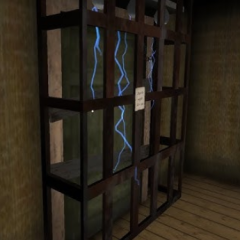

The Fields opens with the player stranded in a quiet rural area after missing the final bus home. There is no immediate instruction on what to do next, and the situation unfolds through movement and brief narrative encounters. Progress is driven by attention to surroundings and responses to events rather than by completing assigned tasks. The experience is short, but its structure encourages careful consideration of each interaction.
Story Flow And Player Decisions
The narrative is shaped by a sequence of choice-driven moments that appear as the player advances. Dialogue prompts and situational decisions guide how events develop, but the game does not explain their consequences in advance. Each decision alters the direction of the story, sometimes subtly and sometimes more clearly. The player is expected to interpret context and tone rather than rely on mechanical indicators, making awareness central to progression.
Exploration And Environmental Use
Exploration takes place across limited outdoor spaces connected by simple paths. Movement is direct and uncomplicated, with no maps or markers guiding the way. The environment serves as a backdrop for narrative progression rather than as a space for discovery of items or secrets. Interaction is minimal and focused, ensuring that attention remains on unfolding events instead of system management.
Midway through a playthrough, progression consistently depends on several recurring actions:
· walking through open areas toward new encounters
· reading and responding to dialogue prompts
· making situational decisions with delayed outcomes
· reaching one of multiple possible conclusions
These actions form the complete gameplay loop without introducing additional mechanics.
Structure Of Endings And Replay
The Fields includes multiple endings determined by earlier decisions. None of these outcomes are presented as definitive solutions, and each offers a different perspective on the events experienced. Because the game does not track choices explicitly, understanding how outcomes are reached often requires replay. This structure encourages players to revisit the experience and approach situations differently to observe how the narrative shifts.
The presentation uses restrained visuals and sound to support pacing. Environments are simple and readable, avoiding detailed decoration that could distract from movement and dialogue. Audio elements are limited to ambient sound and occasional cues, reinforcing awareness of space rather than directing behavior. The interface remains unobtrusive, showing only what is necessary to continue.
