
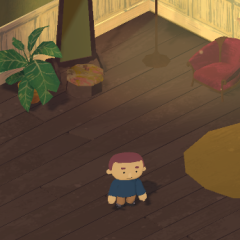
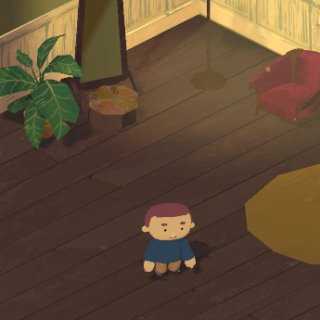



















Fossil Quest places the player in a role focused on research and collection rather than competition or urgency. From the opening moments, attention is split between traveling to excavation areas and managing discoveries afterward. The game is structured around gradual progress, where advancement comes from repeated exploration and careful organization. There are no strict objectives pushing the player forward, allowing activities to be approached in a flexible order.
Dig Sites And Exploration Flow
Excavation takes place in designated dig zones where fossil fragments are hidden beneath the ground. Each site encourages slow and deliberate movement, as careless digging can limit what is uncovered. The layout of these areas varies, which keeps exploration from becoming routine. Tools are simple and consistent, shifting focus toward positioning and choice rather than mechanical difficulty. Time spent in the field is balanced by the need to return with meaningful finds rather than empty runs.
Fossil Recovery And Assembly
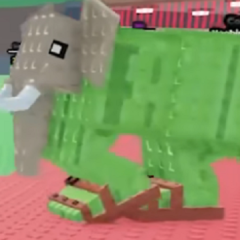
Recovered fossils are not immediately complete. Individual bones and fragments must be identified and combined later, reinforcing a process-driven structure. Assembly requires attention to form and placement, encouraging players to understand how pieces relate to one another. Progress is uneven by design, as some species take longer to complete than others. This uneven pace supports long-term engagement without forcing a specific order of completion.
During normal progression, the player repeatedly engages with several core actions:
· traveling to excavation locations
· uncovering fossil fragments
· assembling partial or complete skeletons
· preparing discoveries for exhibition
These actions form the foundation of the game’s structure and remain consistent throughout play.
Museum Space And Organization
The museum serves as a central location where discoveries are stored and displayed. Players decide how fossils are arranged, which specimens are shown, and how space is used. There is no scoring tied to layout choices, allowing presentation to remain personal rather than optimized. The museum grows gradually as more fossils are added, reflecting progress visually instead of through abstract metrics.
The interface supports smooth transitions between excavation and curation. Menus are limited to relevant actions, reducing interruptions during play. Information about fossils and assembly is presented clearly without excessive guidance. Navigation emphasizes clarity, allowing focus to remain on objects and placement rather than system management.
