
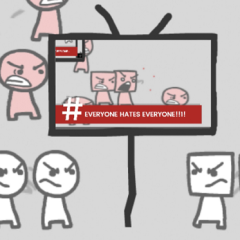
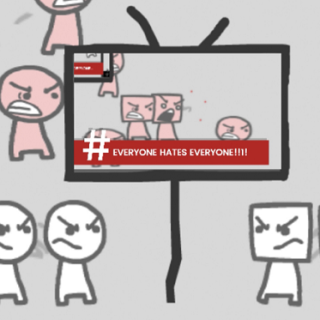


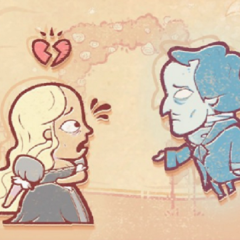










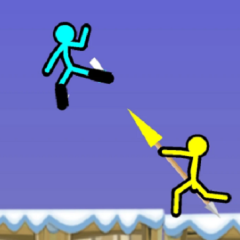


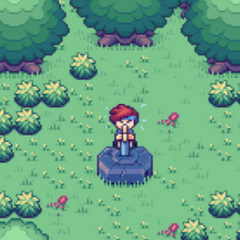



We Become What We Behold is a short interactive game that examines how observation and repetition influence collective behavior. The player is given control of a camera and placed in a small environment populated by simple characters. At first, interactions appear neutral and routine, with no clear conflict present. The game establishes a closed system where every action is visible and recorded. From the beginning, the player’s role is not to intervene directly, but to decide what moments deserve attention.
Observation As A Game Mechanic
The main mechanic of We Become What We Behold revolves around choosing what to focus on. The camera is used to capture specific interactions, which are then broadcast back into the environment. Characters react not to events themselves, but to what is repeatedly shown to them. This creates a feedback loop where attention reshapes behavior. The player quickly learns that neutrality is difficult to maintain, because every captured moment reinforces a certain pattern.
Escalation Through Selection
As the game continues, minor actions begin to carry greater weight due to repetition. The player is encouraged to make selections under time pressure, often without full awareness of long-term consequences. Core actions during this phase include:
· aiming the camera at specific interactions
· choosing which behaviors to record
· ignoring neutral moments
· reacting to shifts in crowd behavior
· continuing the cycle without reset
These actions are limited, but their impact grows as the environment responds. The game does not introduce new mechanics, relying instead on escalation created by accumulated choices.
Environmental Response And Change
The environment in We Become What We Behold is deliberately small and repetitive. This design ensures that changes are noticeable and directly linked to the player’s actions. Characters begin to adopt exaggerated behaviors based on what they have seen, even if those behaviors were initially rare. The lack of explicit goals reinforces the idea that progress is not measured by completion, but by transformation of the system itself.
Toward the later stages, the pace increases and choices become more constrained. The player is presented with fewer neutral options, making disengagement nearly impossible. This creates a situation where observation alone feels like participation. The game never confirms whether any outcome is correct, leaving interpretation entirely to the player.
