






















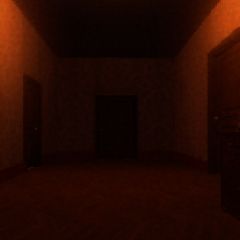




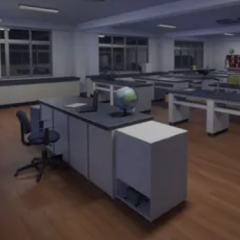

Baldi’s 67 Basics is a modification that expands the familiar school escape formula into a longer and more structured challenge. The player enters a closed educational building where progression depends on collecting a large set of required items before leaving the area. The environment follows recognizable patterns of hallways and classrooms, but the increased objective count changes how the space is used. Instead of quick movement toward an exit, the player must remain inside the building for an extended period and manage repeated encounters.
Expanded Objective And Player Focus
The main goal in Baldi’s 67 Basics is centered on locating a significantly higher number of notebooks than in earlier versions. This adjustment alters pacing and attention. Players must constantly track progress while deciding which rooms to enter and when to retreat. Because the objective is stretched across more locations, mistakes become more costly. The player is required to think ahead rather than react moment by moment, as running without a plan often leads to being cornered.
Movement And Survival Actions
Gameplay revolves around navigating corridors while responding to changes in threat presence. The player repeatedly performs actions that define the core loop:
· moving between classrooms to locate required items
· collecting notebooks and updating total progress
· listening for sound cues that signal danger
· adjusting routes based on blocked paths
· attempting to reach the exit after completion
These actions repeat across the entire session, but their difficulty increases as the player spends more time inside the building. Familiar mechanics gain new weight due to the length of each run.
Threat Scaling And Environment Pressure
As more notebooks are collected, the environment becomes less forgiving. Characters that patrol the school appear more frequently, reducing safe movement options. Corridors that were once easy to pass through may require careful timing later on. The longer structure of the game creates pressure through accumulation rather than sudden difficulty spikes. Players must manage endurance and consistency instead of relying on short bursts of progress.
Near the end of a run, navigation becomes more restrictive. The remaining notebooks are often located far from the exit, forcing the player to cross dangerous areas repeatedly. This stage emphasizes memory and spatial awareness, as returning to previously visited rooms is unavoidable.
