
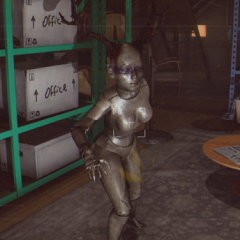
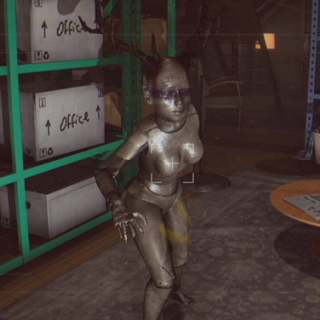

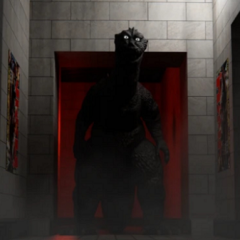
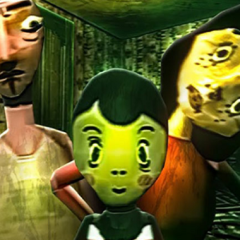








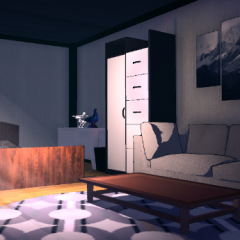


The 18th Attic – Cat Anomaly Horror Game (Teaser) places the player inside a confined attic that operates as a repeating space rather than a linear level. The experience is presented from a first-person view and does not rely on objectives shown on screen. Instead, progress is tied to careful observation of the environment and recognition of changes across repeated cycles. The attic functions as a closed system where memory, perception, and repetition define how the session advances.
Structure and Narrative Method
The teaser delivers its narrative without direct explanation or dialogue. Context is introduced through fragments uncovered during exploration, and these fragments are connected to the player character’s past. The attic remains the central location, and its repeated layout creates a stable reference point for noticing deviations. Each cycle reinforces familiarity, making alterations easier to detect. The absence of explicit storytelling encourages the player to form connections based on visual evidence rather than scripted events.
Core Interaction Loop
Interaction is limited and consistent throughout the teaser. The player moves through the attic and uses a camera to document abnormal elements. Anomalies are not always obvious and may require comparing the current state of the attic to previous loops. Capturing these anomalies with the camera is the primary method of progression, as photographs unlock pieces of narrative information. There is no combat system, and survival depends on awareness rather than confrontation.
Key interaction elements include:
· navigating the attic in a fixed first-person perspective
· identifying environmental inconsistencies
· using a camera to record anomalies
· unlocking memory fragments through documentation
· responding to changes without direct prompts
These mechanics form a cycle of observation, confirmation, and advancement.
Environmental Consistency
The attic is designed to appear mostly unchanged between loops. Furniture placement, room layout, and navigation routes remain familiar, creating a baseline for comparison. When anomalies appear, they disrupt this baseline in subtle ways. Lighting adjustments, object behavior, or spatial inconsistencies act as indicators of progression. The limited scale of the environment reduces complexity and directs attention toward detail rather than exploration.
Companion Presence
A cat accompanies the player during the experience and serves as a functional element rather than a decorative feature. Its behavior can reflect changes in the environment or the player’s psychological state. While the teaser does not fully explain this relationship, the cat acts as a reference point during repeated cycles. Its presence adds an additional layer to the observation process without introducing new controls.
