
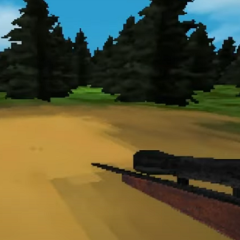
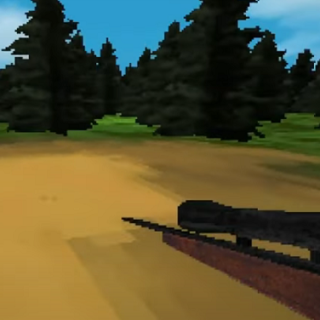


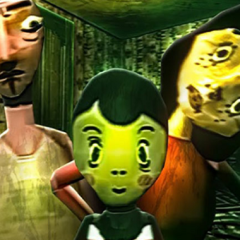






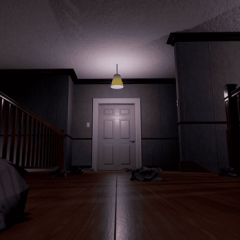

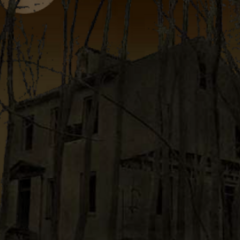

Hunting is a short first-person game available on itch.io that begins with a familiar premise and limited interaction. The player is placed in a forest and given the role of a hunter whose only apparent task is to find and shoot deer. There is no story introduction, no interface explaining objectives, and no clear endpoint presented at the start. This minimal setup encourages the player to rely on expectation and prior experience rather than explicit instruction, shaping how the first moments are interpreted.
Player Role and Assumptions
From the beginning, Hunting establishes a routine based on common mechanics. The player can move through the forest, aim a weapon, and fire at animals encountered in the environment. The lack of additional systems such as scoring, inventory, or progression reinforces the idea that the game is focused on a single repeated action. By keeping the player’s role narrow and familiar, the game builds a baseline of normality that remains important as the experience develops.
Mechanical Simplicity
Hunting does not expand its mechanics over time. The controls and available actions remain consistent from start to finish, and no new tools or abilities are introduced. This simplicity places emphasis on repetition and observation rather than skill growth or optimization. As the player continues to act within the same framework, attention shifts from what can be done to what is happening around those actions.
Core gameplay elements include:
· moving freely through a forested area
· locating deer within the environment
· aiming and firing a weapon
· repeating the hunting process without guidance
· noticing changes during continued play
This loop remains unchanged, even as the experience itself begins to feel different.
Environmental Response
The forest environment plays a central role in how Hunting communicates change. There are no scripted scenes or direct signals indicating a shift in direction. Instead, the atmosphere evolves through subtle adjustments in pacing, sound, and visual feedback. Because the setting is sparse and the mechanics are stable, even small deviations stand out. The player is left to interpret these moments without confirmation, which creates uncertainty without altering the control scheme.
Tone and Interpretation
Hunting does not explain its intent or meaning through dialogue or text. Any interpretation is formed through the contrast between initial expectations and later impressions. The game allows the player to continue performing the same actions while questioning their purpose. This approach avoids overt narrative framing and instead relies on player awareness and reflection. The absence of clear rewards or failure conditions keeps the focus on experience rather than outcome.
