





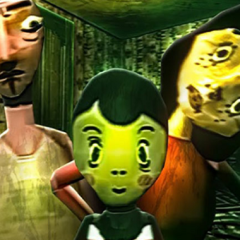
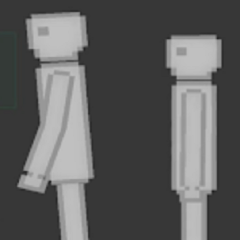
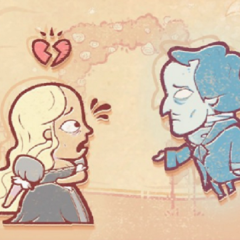

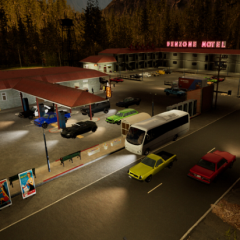











The Choicer Voicer is built around a game-show format in which spoken performances replace most traditional game controls. Players are presented with short audio samples and must reproduce them through a microphone. After each attempt, the recording is evaluated and the result is shown through a panel of five judges. There is no campaign, character leveling, combat, or sequence of numbered stages. Instead, the game is designed for repeated sessions where the voice clips, participants, visual presentation, and even the type of performance can change.
What Happens During a Game
Before starting, players select the content they want to use and configure the show. In a standard round, the game chooses a sample from the active Voice Pack. The contestant hears the original recording and then gets a chance to imitate it.
A performance generally involves:
- listening to the complete reference clip;
- recording an imitation with a microphone;
- trying to reproduce the timing and delivery;
- receiving a result from the judges;
- moving on to another randomly selected sample.
The clips are not limited to normal spoken sentences. Packs can contain character voices, shouting, reactions, unusual sounds, dialogue, short musical vocalizations, or other recordings that can be recreated by a player.
The Choicer Voicer can be played alone, but it also supports local multiplayer with up to four contestants. Instead of everyone performing simultaneously, participants take turns. This allows the same set of clips to produce different results depending on how each person interprets the original recording.
Much of the Game Comes From Packs
The available content is not limited to what comes with the base game. The Choicer Voicer has a modular pack system, and community-made content can replace both the material being performed and many parts of the game-show presentation.
Voice Packs supply the normal audio prompts, while other types of packs handle separate elements:
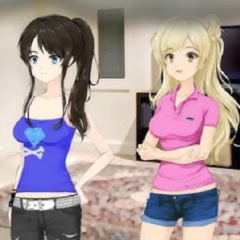
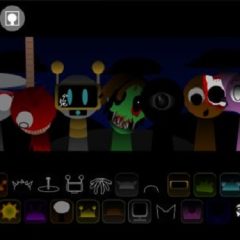
- Judge Packs replace the five-person judging panel.
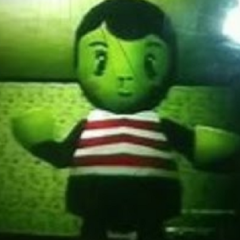
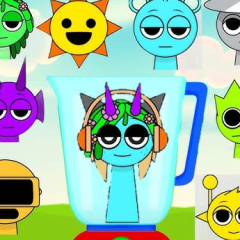
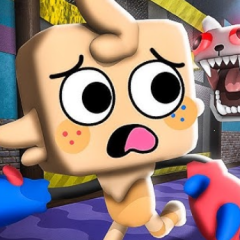
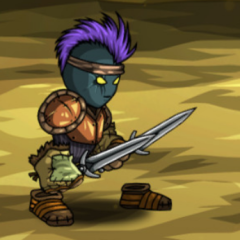
- Contestant Packs change the player character and reactions.
- Host Packs replace the presenter.
- Studio Packs provide different show environments.
- Menu Packs alter parts of the interface.
- Chatter Packs add Twitch-related reactions and interactions.
These packs can be combined independently. A player does not need to install a complete matching set. Voice clips from one theme can be used with a contestant, judges, and studio taken from completely different packs.
Compilation Packs are also distributed by the community. Rather than representing another game mode, these usually bundle several related pieces of custom content into one download.
Dubbing Works Differently
Dub Mode moves away from the normal sequence of isolated voice samples. It uses Dub Packs containing video scenes, dialogue clips, and timing information. The player records replacement dialogue, and the game places those recordings at the appropriate moments in the video.
Clip-by-Clip Mode separates a scene into smaller sections so lines can be performed individually. Freestyle Dub Mode allows the player to approach the same scene more continuously. Depending on how a pack is configured, dialogue can also be associated with specific characters, allowing the player to perform selected roles.
Dub Packs may contain additional material such as captions, character images, and backing audio that preserves music or environmental sounds while replacing the original voices.
Different Sessions Without Traditional Progression
The Choicer Voicer does not ask players to unlock a final level or complete a fixed story. Its variety comes from changing the content and format of each session. A solo game can be used to experiment with unfamiliar voices, a local multiplayer round can compare several contestants, and a Dub Mode session can involve recording an entire scene instead of chasing a judge score.
As more Voice Packs, Dub Packs, characters, judges, and studios are installed, the possible combinations increase without changing the central idea: hear a performance, use your own voice to respond, and see what result the game produces.
