
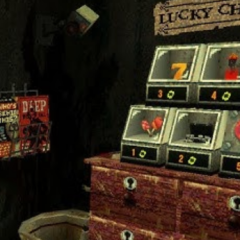
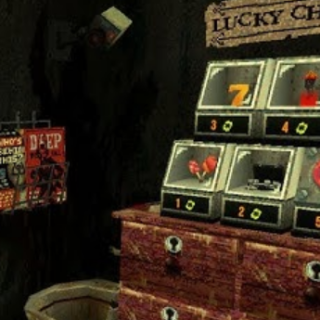






















CloverPit is a strategy-focused roguelike game built around a slot machine system and short, high-pressure decision loops. The player is placed in a confined room and must earn enough currency to repay increasing debts within a limited number of actions. Each run revolves around managing risk, choosing when to push for higher rewards, and deciding how to use limited resources. There is no movement through large environments or exploration; the entire experience is centered on making careful choices under growing pressure.
Core Structure And Flow
The gameplay is divided into rounds, each with a fixed goal that must be reached before time runs out. Players interact mainly with a slot machine that determines income, while other tools in the room help influence outcomes. Every round increases the required payout, forcing players to adapt their strategy as conditions become stricter. The challenge is not speed but judgment, as poor decisions early on can limit options later in the run.
Decision-Making And Mechanics
CloverPit relies on layered systems that interact with one another. Players can earn tickets alongside coins, which are used to purchase modifiers that affect how the slot machine behaves. These modifiers can improve odds, change payout logic, or alter how risks function. Choosing when to spend resources and when to save them becomes essential, especially as the cost of failure grows over time.
Key gameplay elements include:
· Limited slot machine spins per round
· Tickets used to unlock modifiers
· Increasing debt thresholds
· Permanent or temporary perks
· Risk-based decision making
These elements work together to create tension, as every choice can either stabilize a run or push it closer to failure.
Environment And Presentation
The setting of CloverPit is intentionally minimal. The small room, static camera, and limited interaction points keep attention on the mechanics rather than visuals. This design reinforces the feeling of confinement and urgency. Sounds, interface cues, and animations are used to communicate risk and reward clearly, helping players understand outcomes without unnecessary distractions. The atmosphere supports the idea of being trapped in a system where progress depends entirely on choices.
Progression And Replay Value
Progression in CloverPit is tied to knowledge rather than upgrades. Players learn how different modifiers interact, when to take risks, and how to prepare for higher debt levels. Each run provides new combinations and outcomes, making repetition an essential part of mastering the game. Failure is expected and serves as a learning tool rather than a punishment.
