
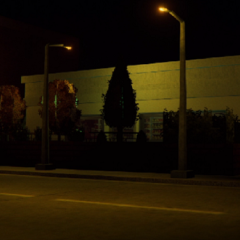


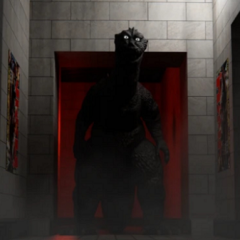
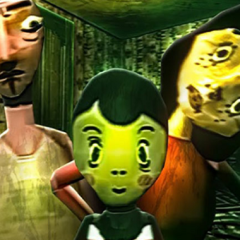
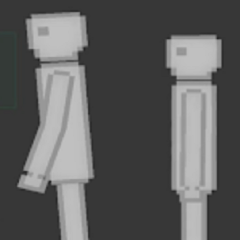






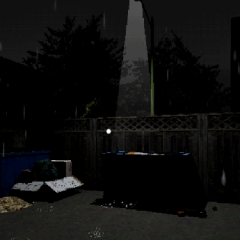
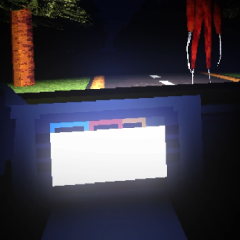
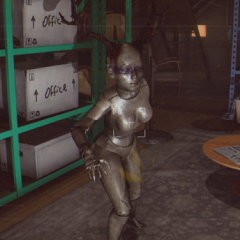
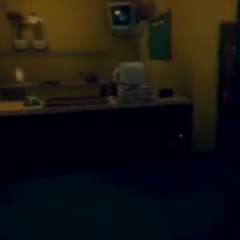


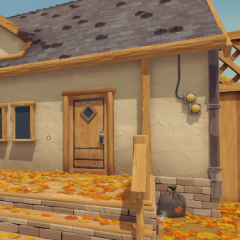
Dead Trust places the player in the role of Kevin, who spends a night at home while his parents are away. The game starts with a routine environment: a house, a quiet evening, and simple tasks that set the tone. The calm does not last long. An unexpected explosion in the distance signals the beginning of events that reshape the atmosphere. From this moment, Kevin’s night becomes a sequence of observations and reactions as the world outside grows more unstable.
Progression and Player Routine
The gameplay is built around straightforward movement and interaction. Kevin navigates through the house, checks different rooms, and pays attention to subtle changes. There are no puzzles or branching choices, which keeps the focus on the environment itself. As the tension increases, the player must adapt to short cues—sounds, flickering lights, or objects positioned differently than before. Each step feels intentional, guiding the player toward recognition that someone or something approaches the house after the explosion.
Core Components of the Gameplay Experience
Dead Trust relies on a minimal but effective structure composed of several key elements:
· a small home layout with a few accessible areas
· movement-based gameplay without extra mechanics
· environmental clues that progress the story
· a threat linked to recent events outside the house
· a short session designed to be experienced in one sitting
These components work together to maintain a consistent pace while keeping the player alert.
Visual Direction, Sound, and Use of Space
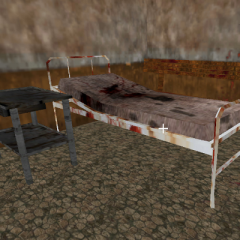
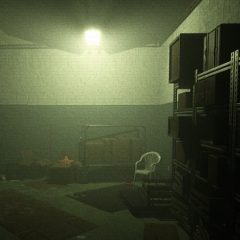
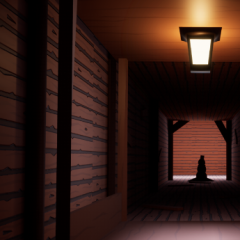
The game uses a low-fidelity visual style with restricted lighting, limiting how much the player can see at once. Narrow hallways and shadowed corners create a pattern in which the player must rely more on sound than sight. Audio cues carry most of the information: footsteps in the distance, sudden knocks, or environmental noises that shift in intensity. The confined design of the house ensures that even a small noise feels significant. Movement becomes slower and more deliberate as the tension builds.
Overall Impression of the Experience
Dead Trust offers a concise survival sequence centered on awareness rather than action. The lack of complex mechanics allows the player to focus entirely on the unfolding situation and the slow approach of danger. Its short length supports a direct narrative flow without unnecessary segments. For players who appreciate compact psychological tension, the game provides a clear, focused example of how minimal spaces and simple interactions can create an effective atmosphere. The experience stays consistent from start to finish, maintaining steady pressure throughout the night.
