
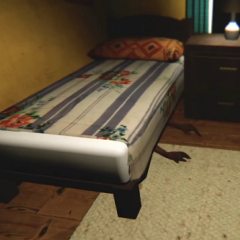
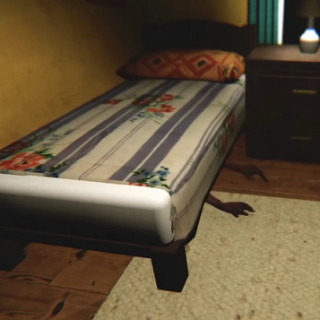
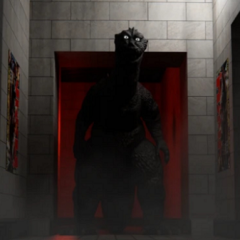
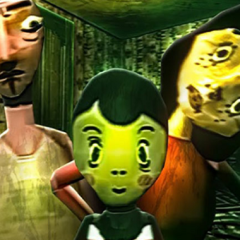












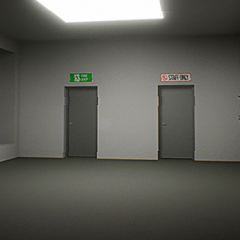
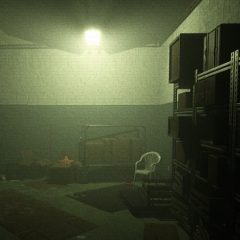

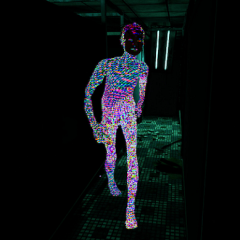

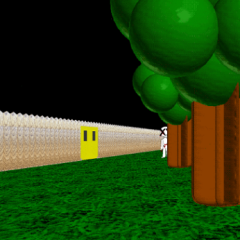
DON’T SLEEP is a first-person horror game structured around endurance within a confined nighttime setting. The player is placed in a limited interior space where remaining conscious is the primary requirement for survival. The game does not introduce tutorials or explicit objectives, instead relying on environmental signals to communicate danger. From the beginning, the experience emphasizes restraint, forcing the player to operate within strict spatial and sensory limits as time moves forward.
Design Premise
The core idea behind DON’T SLEEP is centered on prolonged alertness under pressure. The night progresses continuously, and the environment becomes less predictable as time passes. There is no clear narrative exposition explaining the situation. Context is conveyed through repetition, sound cues, and the gradual escalation of risk. The lack of direct explanation encourages players to focus on behavior patterns rather than story details, learning through consequence rather than instruction.
Player Interaction Model
Interaction is intentionally minimal. The player can move, change position, and observe, but cannot fight or directly interact with threats. Survival depends on understanding when to stay still and when to relocate. The game space is small, which limits options and increases the impact of each decision. Mistakes do not always result in immediate failure, but they increase pressure and reduce safe options over time.
Core interaction elements include:
· navigating a restricted indoor area
· avoiding hostile presence without confrontation
· monitoring environmental signals for danger
· managing positioning during prolonged exposure
· lasting until the end of the night cycle
These elements combine to form a loop focused on patience and awareness.
Threat Behavior
Threats in DON’T SLEEP are not presented as conventional enemies. They emerge gradually and react to player behavior rather than following fixed paths. Often partially hidden by darkness, these entities rely on sound and timing to affect the player. The absence of clear visual confirmation increases uncertainty and discourages rapid movement. Threats are designed to enforce caution, making stillness as important as motion.
The environment is built with simplicity in mind. Rooms are familiar and repetitive, which helps players develop spatial memory. This familiarity makes subtle changes more noticeable, such as altered lighting or new sound patterns. Audio design plays a critical role, with quiet cues indicating changes in threat state or progression of time. Music is minimal or absent, allowing ambient noise to function as the primary feedback system.
