




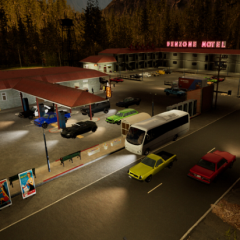












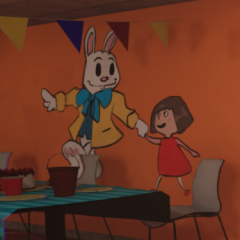
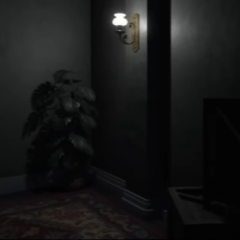
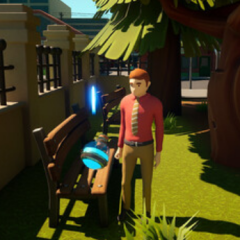



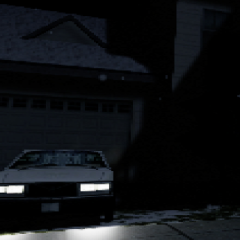

Flesh, Blood, & Concrete presents a short narrative about a woman named Lera who seeks help after her car leaves her stranded during a winter evening. A stranger leads her to an isolated apartment block, which becomes the central location of the game. At first, the building seems like a temporary refuge, but its rooms and corridors do not maintain a consistent structure. As Lera explores further, she realizes that the place responds not only to her presence but also to what she carries emotionally. The game uses small transitions and environmental details to guide the player through a story shaped by memory and uncertainty.
Initial Movement Through the Building
The early part of the experience introduces simple navigation and interaction. Lera checks objects scattered across various rooms, many of which appear abandoned long ago. These items serve less as puzzle tools and more as narrative markers that hint at former occupants or at Lera’s own past. The layout of the building begins straightforwardly, but small inconsistencies soon appear. A hallway may feel longer than before, a room may shift in design, or an object may appear where it was not earlier. These changes build a quiet sense of instability without interrupting progression.
Midgame Transformation and Key Signs
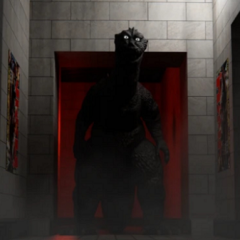
As Lera travels deeper into the structure, the environment deviates from any standard building logic. Floors connect in ways that do not align, and repeated paths reveal new details. Midgame often introduces several notable effects:
· corridors that loop back to earlier areas in altered forms,
· shadows or figures that appear at unexpected moments,
· objects tied to Lera’s memories rather than to the building itself,
· rooms that change layout upon returning,
· transitions that ignore physical orientation.
These elements signal that the building functions less as a physical place and more as a reflection of internal conflict.
Themes Leading Toward the Ending
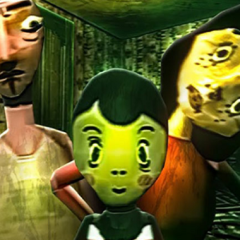
Flesh, Blood, & Concrete uses its shifting environment to convey themes of identity, personal burden, and avoidance. The further Lera moves through the building, the clearer it becomes that she confronts parts of her life she has not processed. Each altered room acts as a representation of unresolved thoughts. Encounters with Nika and other characters add layers to the story, suggesting that the building connects emotional history with present decisions.
Closing Sequence and Afterthoughts
The conclusion brings the narrative together without imposing a definitive answer. The player is left to interpret the meaning behind the building’s behavior and Lera’s final decisions. The experience remains grounded in how environment and emotion influence each other. By the end of the playthrough, Flesh, Blood, & Concrete leaves a strong impression through its concise structure and its focus on personal understanding rather than direct explanation.
