

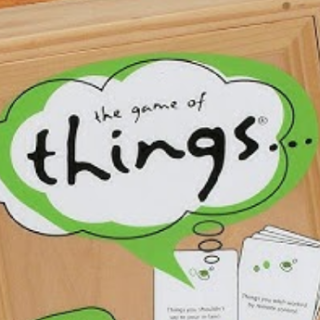


























Game Of Things is a party-style game designed around creativity, humor, and group interaction. It is typically played by multiple people in the same room or through shared screens, where players respond to prompts using their own ideas. The game does not rely on complex rules or mechanics, making it easy to understand for new players. Its main purpose is to encourage discussion, unexpected answers, and social interaction rather than competition or skill mastery.
Core Concept And Flow
The basic structure of Game Of Things revolves around answering open-ended questions. One player reads a prompt, and everyone else writes a response based on their interpretation. Afterward, the answers are collected and read aloud, and players guess who wrote which response. Points are often awarded for correct guesses, but scoring is secondary to the interaction itself. The simplicity of the format allows players to focus on creativity rather than rules.
Player Interaction And Mechanics
Interaction is the foundation of the experience. The game encourages players to think about how others might respond, leading to playful deception and unexpected results. Since there are no strict right or wrong answers, every round can take a different direction depending on the group. The game works best when players are comfortable expressing ideas and reacting to others’ choices.
Key gameplay elements include:
· Reading and responding to open-ended prompts
· Writing anonymous answers
· Guessing which player wrote each response
· Earning points for correct guesses
· Rotating turns to keep participation balanced
These elements create a loop that emphasizes communication and group dynamics.
Structure And Accessibility
Game Of Things is designed to be accessible to a wide range of players. It does not require gaming experience, fast reactions, or strategic planning. Sessions can be short or extended depending on the number of rounds played. Because the rules are flexible, groups often adjust the format to suit their preferences, making it suitable for casual gatherings, parties, or online meetups.
Replay Value And Social Appeal
Replay value comes from the variety of prompts and the personalities of the players involved. Even with the same set of questions, outcomes differ because answers depend entirely on who is playing. This makes each session feel unique. The game also adapts well to different group sizes, allowing both small and large groups to participate comfortably.
