
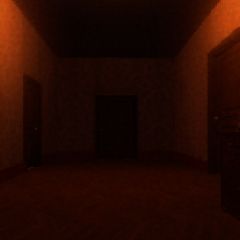
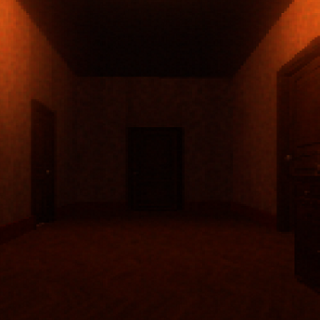


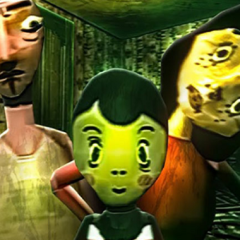


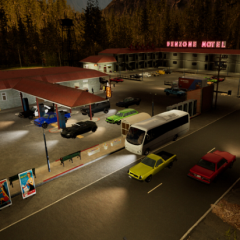










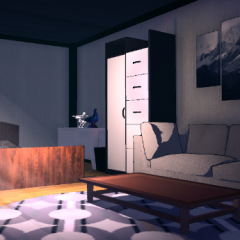
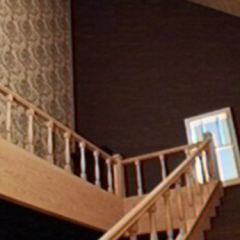

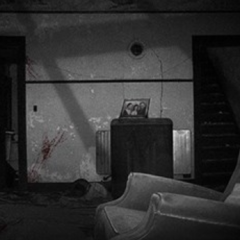

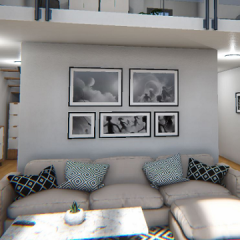
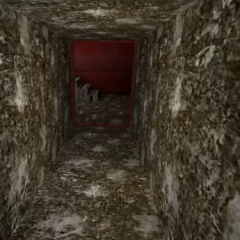
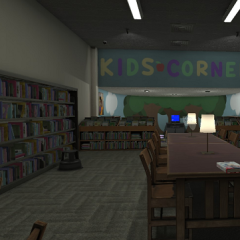

Homework is a short first-person interactive game that combines task-based progression with psychological horror elements. The player takes control of a young child placed in a domestic setting with a clearly defined responsibility: completing assigned homework. The experience unfolds within a confined apartment environment, where navigation and object interaction form the core of gameplay. Rather than emphasizing complex systems or mechanical difficulty, the design focuses on observation, context interpretation, and structured player actions tied directly to the narrative flow.
Scenario Structure And Player Role
The game establishes its premise through environmental cues and routine objectives. The player’s role is defined by everyday activities associated with school responsibilities. Narrative information is delivered indirectly through room layout, interactive objects, and situational context. As the player performs required tasks, subtle changes occur within the environment. These variations introduce tension without altering the primary mechanics. The scenario progression relies on maintaining continuity between player actions and environmental responses.
Core Gameplay Systems And Interaction
Gameplay is built around accessible controls and a minimalistic interaction model. The apartment functions as an integrated gameplay space that determines pacing and movement. The player engages with objects, transitions between rooms, and completes homework-related sequences. Key mechanics include:
· Exploring a limited indoor environment
· Identifying and using interactive elements
· Completing structured task sequences
· Observing contextual shifts
These systems create a loop centered on attention and interpretation rather than reflex-based challenges.
Progression Logic And Behavioral Impact
Homework incorporates a progression structure influenced by player behavior. The sequence of events adapts based on how tasks are completed and which interactions are prioritized. The game avoids traditional scoring systems or difficulty scaling. Instead, narrative developments respond dynamically to decisions and timing. Small variations in player actions can lead to different outcome paths. This design encourages careful evaluation of cause-and-effect relationships throughout the experience.
Structural Focus And Conceptual Themes
The design prioritizes clarity, controlled pacing, and logical interaction consistency. Visual presentation supports spatial awareness and task comprehension. Conceptually, Homework explores themes connected to childhood responsibility, domestic pressure, and psychological tension arising from routine obligations. By structuring gameplay around familiar activities within a confined setting, the game demonstrates how narrative context and environmental feedback can generate suspense without relying on traditional action-oriented mechanics.
