
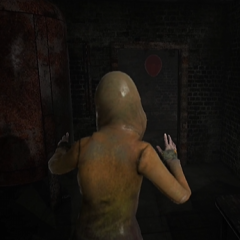
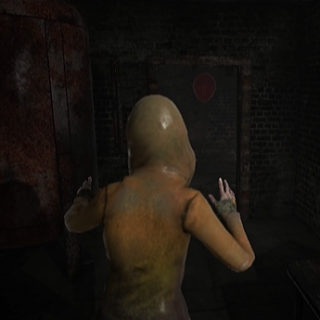

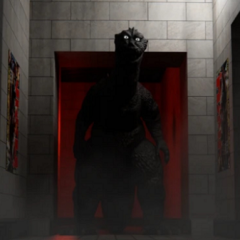










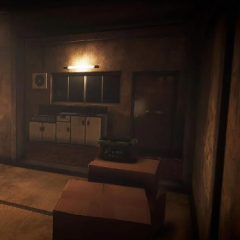



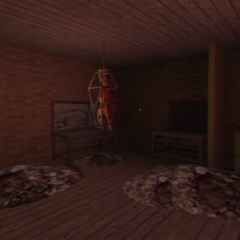
IT – The Game is a third-person horror title that centers on movement through confined spaces and gradual exposure to threat. From the start, the player is placed in an underground setting where limited visibility and narrow pathways restrict freedom of action. The game does not provide explicit instructions or frequent prompts, requiring the player to rely on observation and caution. Progress is defined by advancing through the environment and enduring moments of uncertainty rather than completing clearly stated tasks.
Level Design And Spatial Pressure
The environments are structured as enclosed tunnels, corridors, and chambers that limit vision and movement. The camera follows closely behind the character, which narrows the field of view and reduces awareness of what lies ahead or behind. This perspective increases reliance on sound and subtle visual cues. Paths are mostly linear, but the repetition of similar spaces can make orientation difficult, reinforcing a sense of dislocation. Environmental details serve as the primary indicators of progression instead of maps or markers.
Core Interaction And Player Limitations
Gameplay interaction is intentionally restricted. There are no weapons, inventory systems, or upgrade mechanics. The player’s role is limited to movement and reacting to changes in the environment. This restraint places emphasis on pacing rather than action. Encounters are designed to interrupt exploration rather than dominate it, making each appearance noticeable and impactful. The absence of combat removes the option of confrontation, forcing avoidance and awareness instead.
Throughout the game, progression consistently depends on a small set of actions:
· moving through narrow and poorly lit spaces
· observing shifts in the environment
· responding to sudden visual events
· maintaining direction without guidance
These actions define the full gameplay loop without introducing additional systems.
Use Of Sound And Timing
Sound design is a primary tool for communication. Ambient noises, distant movement, and echoes provide indirect information about the surrounding space. Silence is used strategically, often preceding moments of tension. Audio cues do not always lead to immediate events, which prevents players from forming reliable patterns. This unpredictability encourages careful movement and sustained attention.
The interface remains minimal and unobtrusive. There are no persistent icons, meters, or objectives displayed on screen. Visual feedback is delivered through lighting changes, character animation, and environmental shifts. This approach keeps focus on the space itself rather than on interface elements.
