
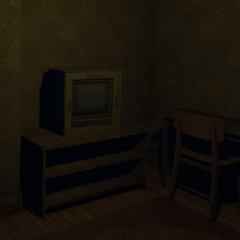
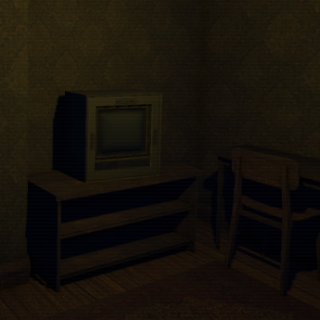





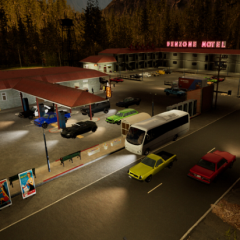










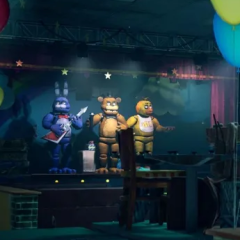



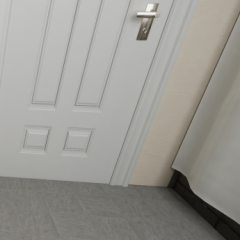



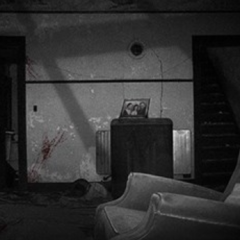


Only Faces Remain presents a brief narrative centered around Marlene, a backpacker who chooses a low-cost lodging as her stop for the evening. The game begins with a straightforward setup: a quiet room, a locked door, and a traveler preparing for rest. Nothing appears unusual at first, yet the structure of the demo steadily introduces small disturbances that alter the tone. The experience relies on observation and timing, guiding the player through a sequence of movements that reveal more than what is immediately visible.
Narrative Flow and Interaction
The progression depends on simple actions such as walking, looking around, and reacting to changes in the environment. Marlene does not speak, and there are no text prompts or direct explanations. Instead, the environment communicates through shifts in sound and the sudden appearance or disappearance of visual elements. The player explores the confined motel space and becomes aware that the room does not remain consistent. Each moment serves as a signal that something in the building behaves in an unfamiliar way.
Fundamental Features of the Experience
To understand the structure of Only Faces Remain, it is useful to highlight several central components:
· a compact motel room as the primary location
· movement-focused gameplay without complex actions
· environmental storytelling that uses visual changes
· sound cues that suggest approaching threats
· a short duration that maintains steady tension
These elements combine to form a concise psychological sequence that relies on the player’s attention to detail.
Visual Style, Audio, and Spatial Focus
The game uses a minimal visual style, keeping objects simple and the layout narrow. The restricted size of the room forces the player to revisit the same areas multiple times, making even slight differences noticeable. Audio plays a major role, offering hints through soft floor creaks, distant knocks, or sudden silence. This interplay between space and sound builds a controlled rhythm. The lack of direct interaction encourages the player to rely on perception rather than problem-solving.
Overall Perspective on the Demo
Only Faces Remain functions as a focused introduction to a psychological scenario without extending into a full narrative arc. The demo delivers a short experience built around repetition, subtle changes, and quiet tension. It does not rely on mechanics beyond movement and observation, allowing the atmosphere to guide the player. Those who enjoy compact horror segments that emphasize mood over action may find this approach appealing. The game’s use of limited space and understated cues creates a sense of unease that supports its central theme.
