
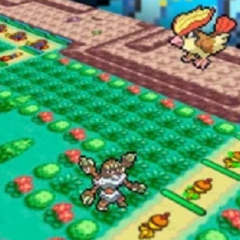
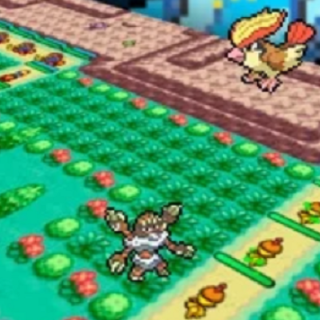














PokéPath TD is a tower defense game that combines path-based defense with persistent unit progression. Instead of relying on temporary upgrades that reset after each match, the game encourages long-term planning through experience and evolution. Enemies move along fixed routes, and the player’s role is to decide which Pokémon to deploy and where to place them. Once a unit is positioned, it functions automatically, making preparation more important than real-time control.
Path Design And Defensive Planning
Each stage is built around one or more paths that determine enemy movement. These paths vary in length and layout, which directly affects placement strategy. Pokémon positioned near long curves can attack enemies multiple times, while straight sections often require higher damage output. Because units cannot be freely repositioned during a wave, early planning plays a critical role in later success. The game rewards understanding how paths overlap and how multiple units can support each other through coverage.
Persistent Growth And Unit Development
Progression in PokéPath TD is designed to persist across sessions. Pokémon gain experience during combat, and this experience remains even if a run ends unsuccessfully. Over time, units evolve into stronger forms, increasing their effectiveness without changing the core mechanics. This system encourages players to invest in a stable roster rather than constantly replacing units. Growth feels incremental, and improvement is visible through repeated use of the same Pokémon.
During regular gameplay, progression is built around a consistent set of actions:
· placing Pokémon along enemy routes
· defeating waves to earn currency
· gaining experience through repeated battles
· evolving Pokémon into advanced forms
These actions define the core loop and remain constant across all routes.
Strategic Variety Across Routes
Different routes require different approaches. Some stages favor concentrated damage in narrow zones, while others benefit from spreading units across longer paths. The ability to move between routes without losing progress allows experimentation with team composition and placement logic. As difficulty increases, enemy waves become denser, making evolved units and coordinated placement more important than sheer quantity.
The interface is structured to keep information accessible without overwhelming the screen. Pokémon levels, evolution status, and placement options are clearly displayed, allowing decisions to be made quickly. Controls are simple, supporting a focus on analysis rather than execution. Visual clarity helps players track enemy movement and evaluate whether their defenses are functioning as intended.
