
















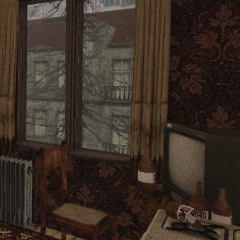



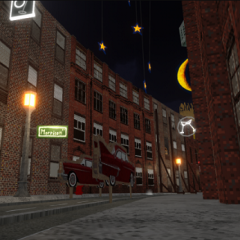



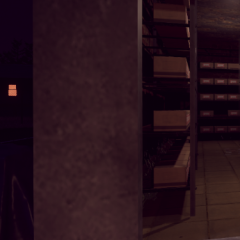
Before reaching any clear objective, the player is placed into a fragmented part of the facility, and Poppy Playtime Chapter 6 develops its progression around incomplete systems and restricted access points. The environment suggests that multiple processes were interrupted, leaving behind mechanisms that still function but no longer connect in a straightforward way. The story unfolds through these inconsistencies, requiring attention to how spaces and objects relate to each other.
Gameplay is centered on reconstructing functional paths. The player activates devices, redirects connections, and restores sequences that allow movement deeper into the area. Each action has a delayed effect, often impacting another location rather than the current one. This creates a layered structure where progress depends on remembering previous interactions and understanding how they influence the wider environment.
Layout And Movement Logic
The chapter uses a segmented layout with multiple entry points between zones. Instead of a single route, players navigate through overlapping paths that eventually converge. Movement becomes part of the puzzle, as choosing the correct order of locations is necessary to maintain progress. Incorrect sequences do not end the attempt but require reconfiguring the approach.
Interaction And System Behavior
Mechanics are based on cause-and-effect relationships between objects and systems. Players must observe how different elements respond when activated, then combine those reactions into a complete solution. Some systems require continuous input, while others depend on precise timing. This creates a balance between planning and execution.
Key Features
- Segmented environments with converging paths
- Indirect progression through system interaction
- Puzzles based on delayed cause-and-effect
- Repeated use of areas with new context
- Increasing reliance on player memory and observation
Compared to earlier chapters, this part reduces explicit direction and increases the need to interpret both environment and mechanics. In contrast to similar titles, it avoids constant urgency and instead builds engagement through structured problem-solving and gradual discovery.
The experience is defined by linking scattered elements into a working sequence, allowing the player to move forward by understanding how the environment operates as a connected system.
