
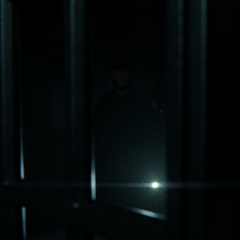
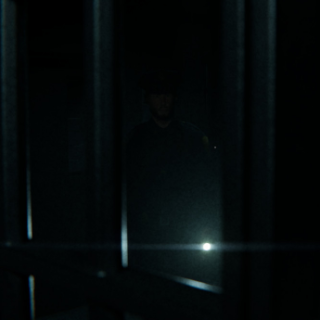

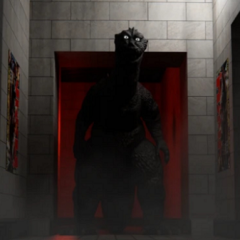
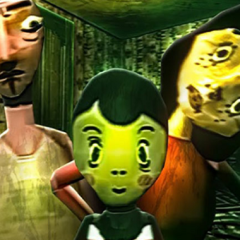









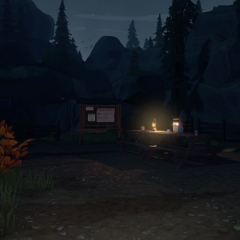


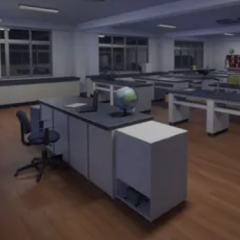
Silent Still 3 is a first-person horror experience focused on perception, space, and controlled interaction. The player is placed inside a limited interior environment that resembles a normal living area, but its behavior changes as the session progresses. There are no instructions, objectives, or interface elements explaining what to do. Movement and observation are the only tools available, and progression depends on remaining within the space and reacting to subtle environmental responses rather than completing defined tasks.
Structure of the Experience
The game is structured as a continuous sequence without chapters or explicit narrative markers. From the beginning, the environment appears stable, but repeated actions and prolonged presence cause gradual changes. These changes do not follow a conventional cause-and-effect pattern and are not explained through dialogue or text. Instead, the structure relies on repetition and variation, where familiar spaces are altered slightly over time. This design encourages the player to notice differences rather than search for solutions.
Player Interaction Model
Interaction in Silent Still 3 is minimal and intentional. The player can walk, look around, and remain still, but cannot manipulate objects or access menus. Environmental reactions are triggered by position, movement, or time spent in specific areas. The game does not reward experimentation with feedback or scores, and there are no failure states. Progress is measured only by the sequence of environmental shifts.
Core interaction elements include:
· first-person movement in enclosed spaces
· progression triggered by presence and timing
· visual changes based on player position
· audio cues indicating state transitions
· absence of explicit prompts or objectives
These elements form a closed system that emphasizes awareness over control.
Environment and Sound
The environment is intentionally limited in scope, using a small number of rooms and simple layouts. This restriction makes changes easier to detect and reinforces a sense of confinement. Objects may appear, disappear, or shift position without explanation. Lighting is used to guide attention rather than to create dramatic contrast. Sound design relies on ambient noise and spatial cues instead of music, helping signal changes in state without direct instruction.
Duration and Replay
Silent Still 3 is designed as a short experience that can be completed in a single session. There are no save points, difficulty settings, or alternative modes. The lack of linear explanation makes replay possible, as repeated sessions may reveal additional variations or timing-based differences. However, replay is optional rather than required for understanding.
