
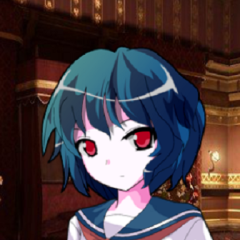
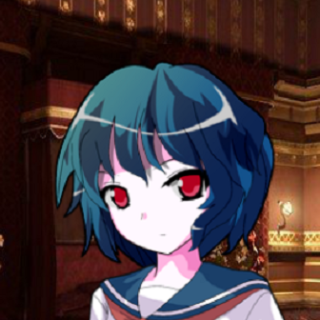


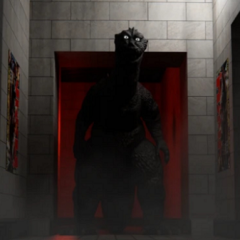
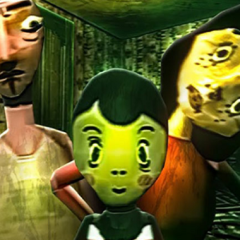














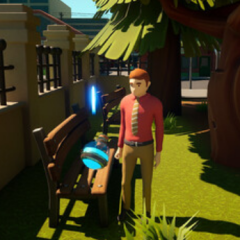



Twilight Observer is a narrative-driven game centered on repetition and information gathering within a closed group setting. The player is placed inside a mansion together with several other characters, all of whom are forced to relive the same sequence of events. Each cycle begins in a familiar way, but the player’s understanding changes over time. The game establishes its structure around learning rather than progression through space or combat, making attention and memory the main tools for advancement.
Time Loop Structure
The core structure of Twilight Observer is based on a repeating time loop that resets events while preserving the player’s knowledge. Conversations, incidents, and character behavior initially follow predictable patterns. As the player completes more loops, previously gathered information can be applied to alter decisions and unlock different outcomes. The loop is not presented as a punishment but as a framework for investigation, encouraging the player to test assumptions and observe cause-and-effect relationships across cycles.
Character Interaction and Choices
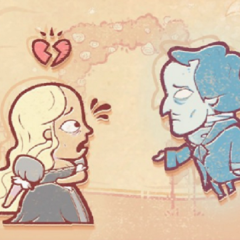
Interaction in Twilight Observer focuses on dialogue and interpretation. The player spends most of their time speaking with other characters, observing their reactions, and choosing responses that influence future developments. Choices are often subtle, and their consequences may not become clear until later loops. One character appears to retain awareness between cycles, providing continuity and reinforcing the idea that memory plays a central role in escaping the situation.
Key interaction elements include:
· engaging in repeated conversations with consistent characters
· choosing dialogue options that affect later loops
· tracking information learned across resets
· identifying contradictions in character statements
· using accumulated knowledge to unlock new paths
These mechanics emphasize reasoning over trial-and-error gameplay.
Environmental Consistency
The mansion setting remains largely unchanged throughout the game. Rooms, hallways, and shared spaces repeat from loop to loop, creating a stable environment for observation. Because the layout is consistent, the player can focus on changes in events and behavior rather than navigation. Familiar locations gain new meaning as the player understands more about what happens within them. The environment acts as a neutral stage where narrative shifts are driven by knowledge rather than physical alteration.
Progression Through Understanding
Twilight Observer does not include traditional progression systems such as levels, skills, or inventory upgrades. Advancement is tied entirely to what the player knows and how that knowledge is applied. Reaching an unfavorable outcome does not end the experience, as each loop provides additional context. The game treats repetition as a learning process, requiring the player to refine decisions over time rather than seek immediate success.
