
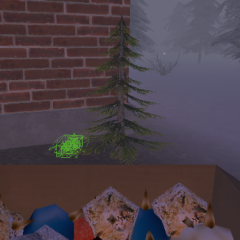
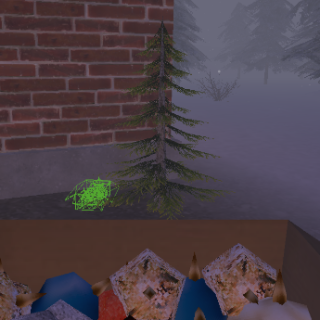
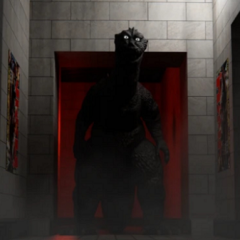

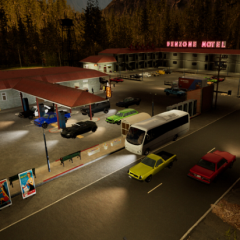







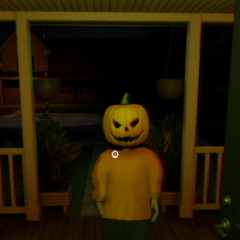

Unwanted Visit is a short first-person horror game that places the player in a remote outdoor setting during a winter night. The experience begins without clear context or instructions, encouraging the player to rely on intuition and observation. The environment feels calm at first, but small details suggest that something is not right. The game avoids direct storytelling and instead allows the situation to reveal itself through pacing and environmental response. Progress is linear and driven entirely by movement.
Player Role and Interaction Model
The player’s role in Unwanted Visit is intentionally restrained. Movement and camera control are the only consistent actions available, with interaction limited to approaching specific areas. There are no puzzles to solve, items to collect, or systems to manage. This lack of mechanics shifts attention to timing and awareness. The player does not influence outcomes through decisions but advances the experience simply by continuing forward.
Use of Environment and Sound
The game relies heavily on its environment to communicate tension. Snow-covered terrain, darkness, and limited visibility define the space. Sound design plays a major role, as subtle audio cues indicate when the situation is changing. These sounds often appear before any visual confirmation, prompting the player to stay alert. The absence of music during long stretches reinforces uncertainty and keeps focus on ambient noise.
During the central part of the experience, the player regularly encounters:
· quiet traversal through open winter areas
· changes in ambient sound
· visual hints that something is approaching
· scripted events triggered by position
· short pauses between key moments
Event Progression and Timing
Unwanted Visit is structured around a sequence of timed events rather than challenges. Each event occurs after the player reaches a certain point or spends enough time moving forward. There are no alternate routes or branching paths, and the game does not encourage exploration beyond the intended direction. This controlled structure ensures that pacing remains consistent and that tension builds gradually rather than through repeated threats.
The experience is designed to be brief and self-contained, usually completed in one uninterrupted session. There are no checkpoints or save states, but the short length makes restarting straightforward. The ending resolves the sequence without explanation, leaving interpretation to the player. Replay does not change the structure, but it can provide clarity on how earlier moments lead into later events.
